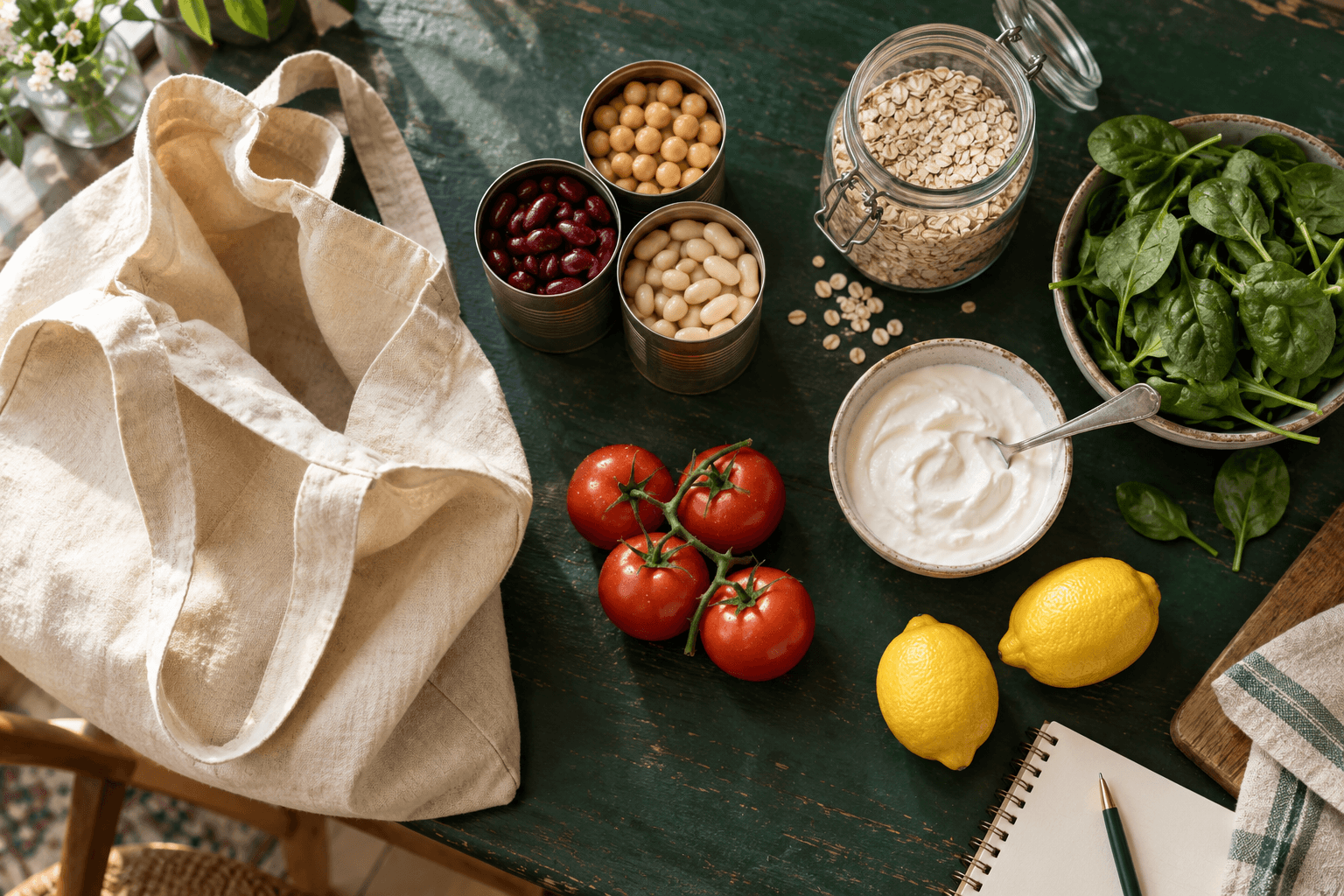
Before picking recipes, open the refrigerator and look at what needs using. Then check the pantry for ingredients that are already waiting: beans, oats, canned tomatoes or broth.
The aim is to connect a few ingredients with meals you would enjoy. You do not need an elaborate inventory system or a perfect clean-out day. A note with three usable items is enough to begin.
Start with the ingredients that need attention
Write down vegetables and opened products you can still safely use. Check their labels and storage history; a recipe is not a reason to keep questionable food. Pick meals that suit what is actually available.
Spinach can connect egg toast with a chickpea skillet. Tomatoes can connect the skillet with a cool bean bowl. Search the recipe box for an ingredient and use the filter to see whether the matching meal fits your day.
Translate the list into a purchase
The planner totals ingredient quantities from selected recipes. It does not know what is already in your cupboard or the sizes sold in your local store. Read the amount, subtract usable stock yourself, then round up to available package sizes.
For example, needing one and a half cans means buying enough to cover that amount; it is not an instruction to find a fractional can on the shelf. Plan another use for the remainder and follow storage instructions after opening.
Check off without changing the recipe
The shopping checkboxes are a trip checklist. Checking an ingredient does not remove it from the recipe or nutritional composition; it just marks that shopping task complete in the current session.
Changing a recipe or its servings rebuilds the list and clears those checks. That prevents an old checked item from appearing complete when a new amount is needed. Save the week if you want to return to the recipe choices later.
Keep substitutions understandable
An ingredient swap changes the meal. A different bean may work in a bowl, while a bread change can affect allergens and texture. The planner cannot assess allergies, interactions or a medically tailored diet.
For the recipe quantities shown, start with the listed ingredients. Adjust to your needs using label information and your own clinician or dietitian’s guidance where relevant. Keep the list readable enough to explain to whoever is doing the shopping.