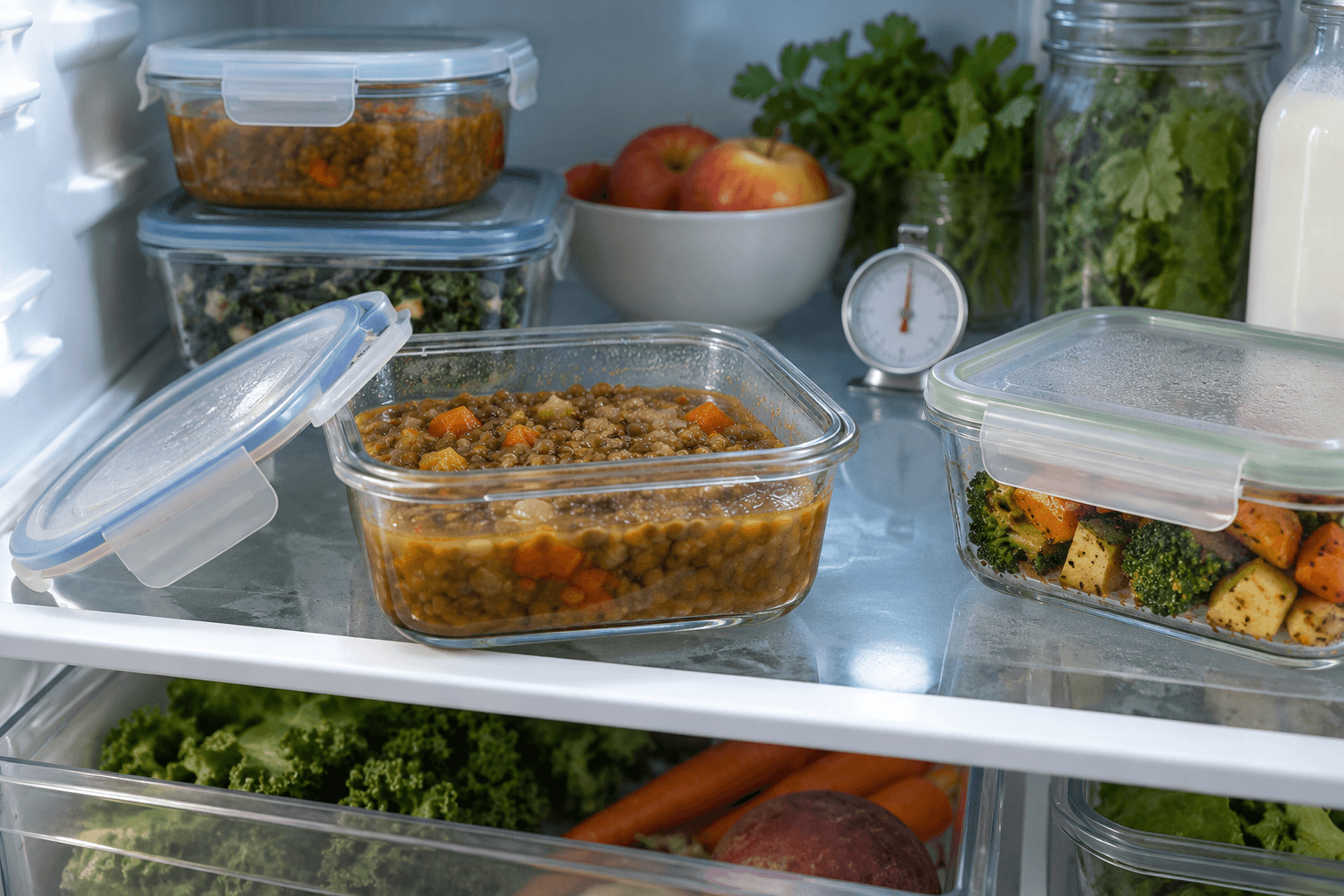
A second portion is most useful when you know when it will be eaten. Before making a larger batch, decide whether the extra portion belongs in the refrigerator for a near-term meal or in the freezer for another day.
Use the government storage chart for the food you have prepared. Suggested recipe timing and an appealing food image cannot tell you whether something has been stored safely.
Keep the timing visible
FoodSafety.gov lists refrigerator guidance for specific foods, including soups, cooked meat and several prepared dishes. Many cooked leftovers have a three-to-four-day window at 40°F or below, but check the matching category rather than assuming every food follows one rule.
Label portions with their contents and preparation date. That gives you something more reliable than trying to remember which container came from which evening. Keep enough space in the refrigerator for air to circulate.
Use a container that fits the job
Portion a cooked pot into smaller, shallow containers and refrigerate promptly. Leave room in a freezer container for expansion where appropriate, and label the item before it becomes hard to recognize.
A portion frozen for later is not a promise that every texture will stay the same. Crunchy vegetables or assembled yogurt bowls may not return in the condition you like. Freeze food that suits your intended next meal.
Reheat with a temperature check
The government cooking chart gives 165°F for reheating leftovers. Use a food thermometer rather than relying on steam at the edge of a bowl. Stir a reheated soup so the heat is distributed.
Reheating is not a way to rescue food with an unsafe storage history. Follow the storage guidance first, then the reheating guidance. When you do not know how food was handled, do not use a meal-plan checkbox as evidence that it is safe.
Let the plan reflect reality
The planner records recipe choices; it does not monitor your fridge, cooking date or temperature. Put a leftover meal within the appropriate storage period, and keep actual labels or reminders alongside the saved week.
Choose smaller servings if an extra portion has no next step. Scaling can make the ingredient list more practical, while safe cooking temperatures remain the same regardless of the batch size.